
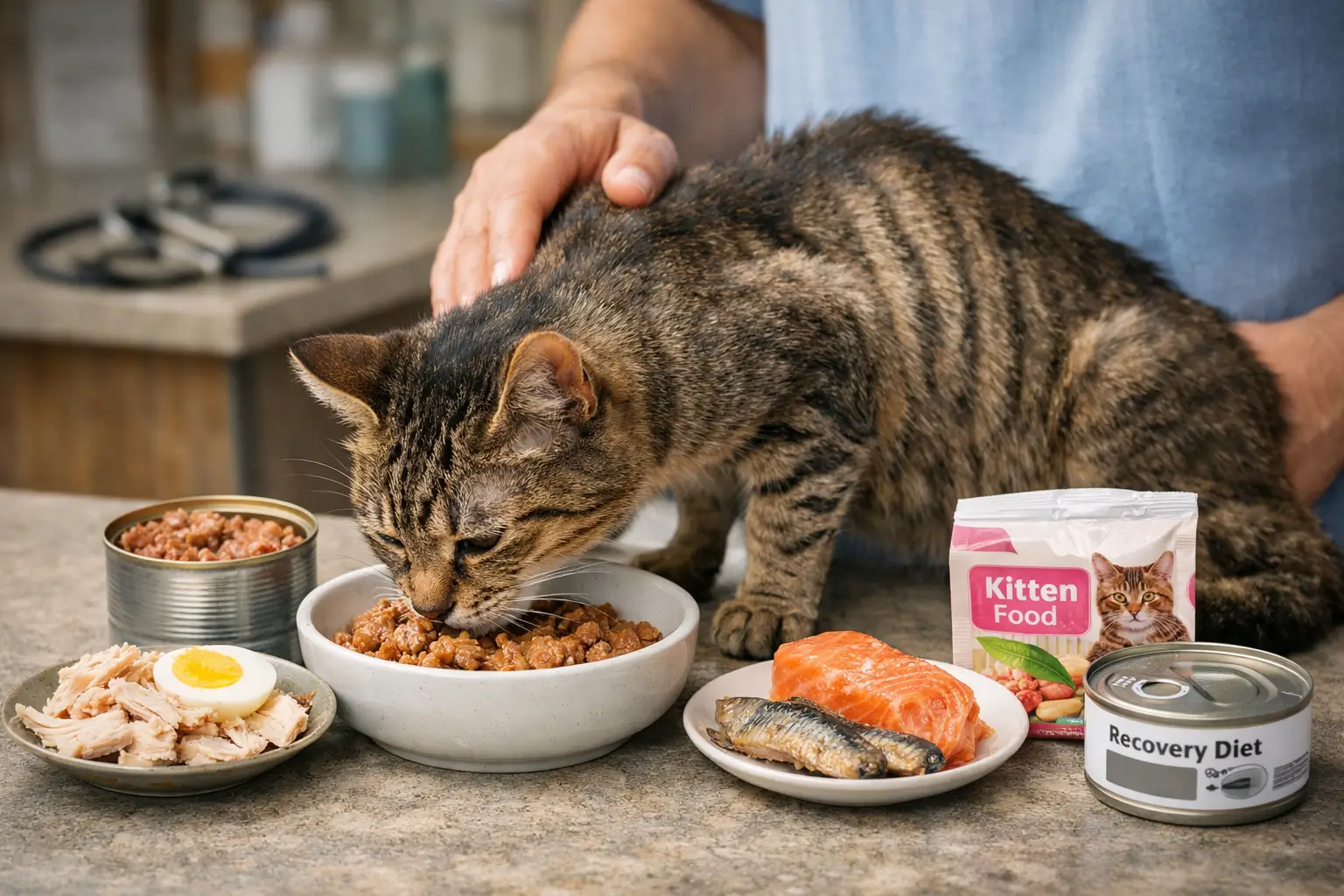
Top 6 Foods for Cat Weight Gain Diet Vet-Approved
If you’ve noticed your cat’s ribs becoming more prominent or their energy levels dropping, you’re likely searching for answers. As someone who has spent over a decade helping cat owners navigate feline nutrition challenges, I understand the worry that comes with having an underweight cat. The good news? A carefully planned cat weight gain diet can make a remarkable difference in your feline companion’s health and vitality.
Table of Contents
In this comprehensive guide, I’ll walk you through the top six vet-approved foods that can help your skinny cat achieve a healthier weight. We’ll explore everything from high-calorie wet food options to recovery diets, while keeping safety at the forefront of every recommendation. Whether your cat is recovering from illness, is a picky eater, or simply needs extra calories, this article will provide you with actionable, evidence-based solutions.
What Is a Cat Weight Gain Diet?
A cat weight gain diet is a nutritionally dense feeding plan specifically designed to help underweight felines safely increase their body mass. It focuses on providing higher calories, quality proteins, and healthy fats through nutrient-rich foods while ensuring all essential vitamins and minerals are met. This approach prioritizes gradual, healthy weight restoration rather than rapid gains that could stress the digestive system.
Why Is My Cat Underweight? The Importance of Veterinary Diagnosis First
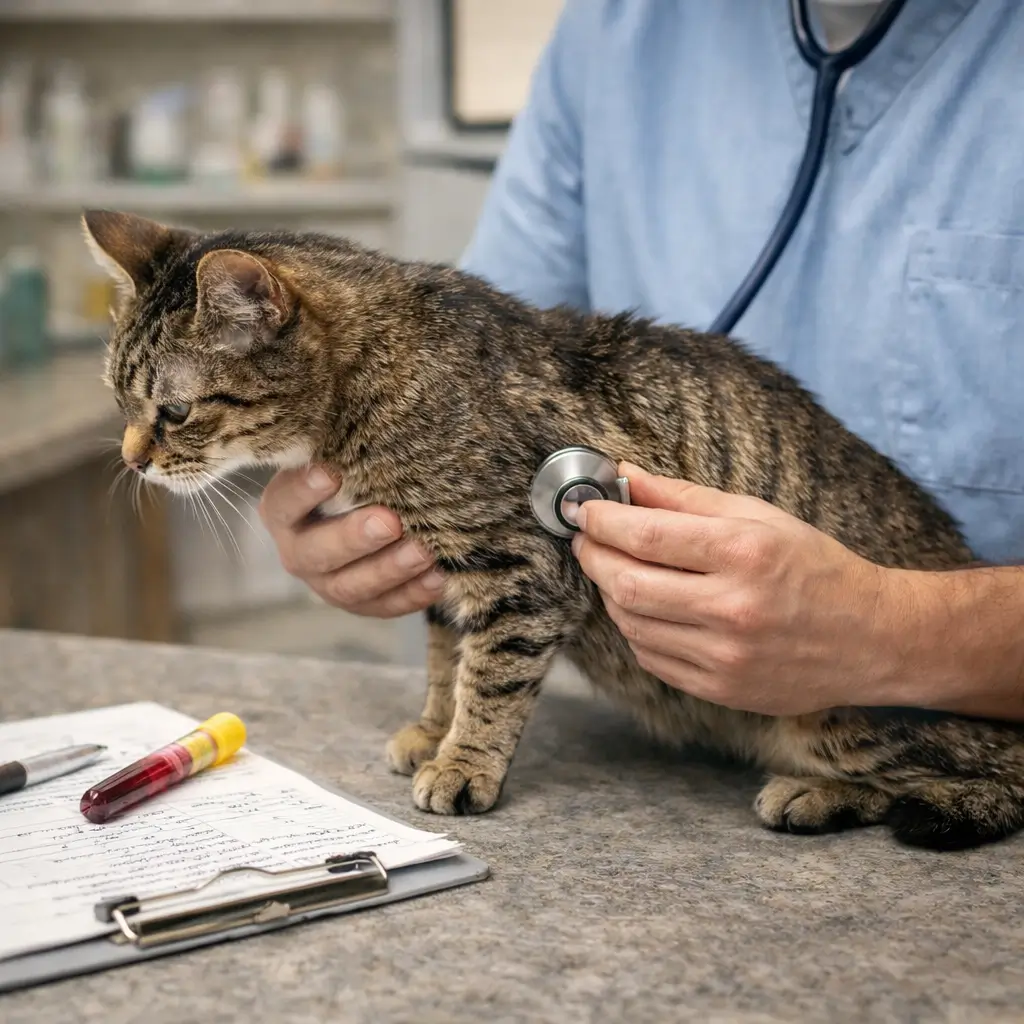
Before we dive into specific foods, I need to emphasize something critical: unexplained weight loss in cats is often a symptom of an underlying medical condition. In my years of experience, I’ve seen countless cat owners jump straight into high-calorie feeding without understanding why their cat lost weight in the first place.
Common medical causes of feline weight loss include:
- Diabetes Mellitus – prevents proper glucose utilization
- Hyperthyroidism – accelerates metabolism significantly
- Chronic Kidney Disease (CKD) – affects appetite and nutrient absorption
- Dental Disease – makes eating painful and difficult
- Intestinal Parasites – steal nutrients from your cat
- Cancer – causes muscle wasting and appetite loss
- Inflammatory Bowel Disease – impairs nutrient absorption
The “Vet First” rule is non-negotiable. Schedule an appointment with your veterinarian to rule out these conditions before implementing any cat weight gain diet. Blood work, a physical examination, and potentially imaging can identify issues that no amount of nutritious feline snacks can solve on their own.
The Top 6 Vet-Approved Foods for Helping Underweight Cats
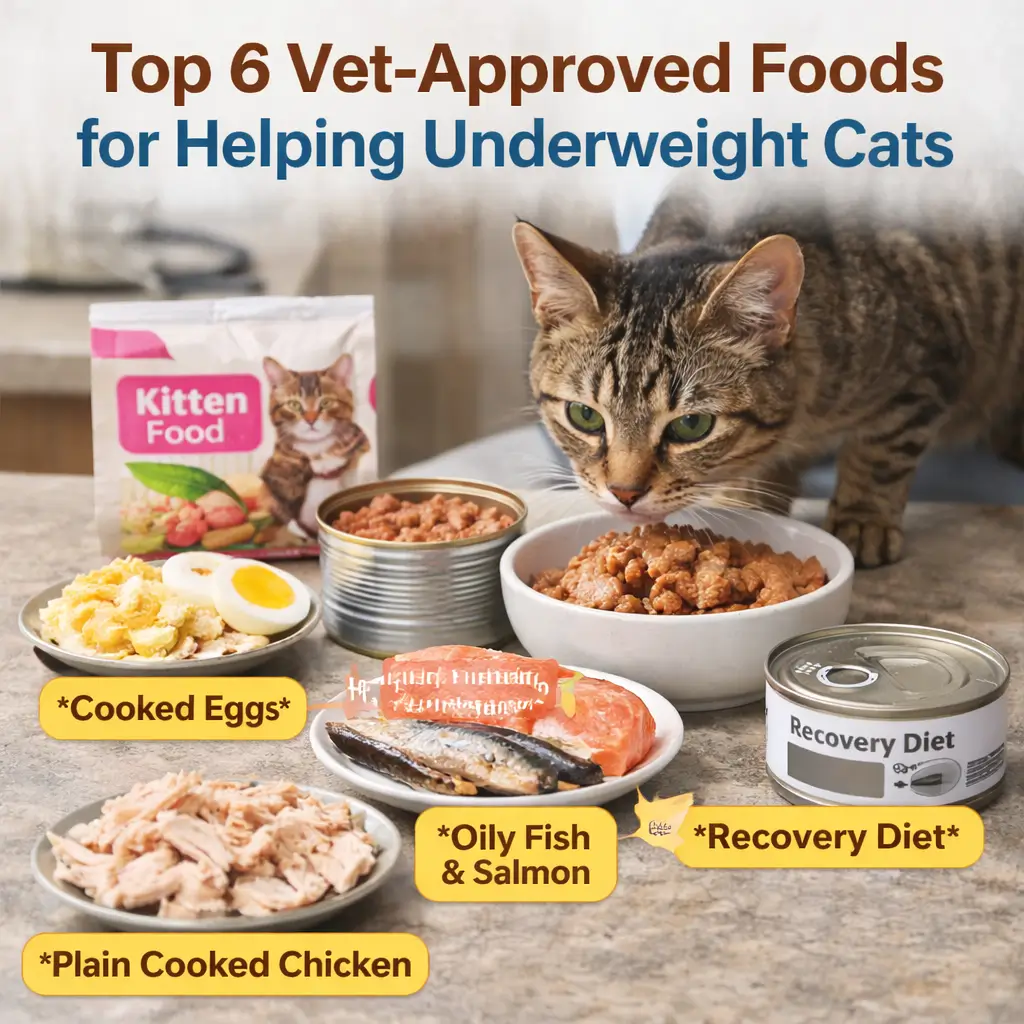
Now let’s explore the specific foods that can safely help your cat gain weight. Each option has been selected based on nutritional value, digestibility, and veterinary recommendations.
1. High-Calorie Wet Food
High-calorie wet food is often my first recommendation for cats needing to gain weight. These formulas pack more calories per serving than standard maintenance diets while providing essential hydration.
Why it works:
- Higher moisture content improves palatability
- Concentrated calories mean smaller portions deliver more energy
- Softer texture is easier for cats with dental issues
What to look for:
- Minimum of 100 calories per 3-ounce can
- Named animal protein as the first ingredient
- No artificial fillers or excessive carbohydrates
⚠️ Medical Warning: High-fat formulas within this category should be avoided for cats with pancreatitis. Fat-rich foods can trigger painful inflammatory episodes in susceptible cats. Always check the fat percentage and consult your vet if your cat has a history of pancreatic issues.
2. Kitten Food for Adult Cats
Here’s a secret that many cat owners don’t know: kitten food for adult cats can be an excellent weight gain tool. Kitten formulas are designed to support rapid growth, which means they’re naturally calorie-dense and protein-rich.
Benefits of kitten food for weight gain:
- 25-30% higher calorie content than adult maintenance food
- Enhanced protein levels for muscle building
- Added DHA and other developmental nutrients
How to use it effectively:
Feed kitten food as a temporary measure, typically for 4-8 weeks, while monitoring weight weekly. Once your cat reaches a healthy weight, gradually transition back to adult food.
⚠️ Medical Warning: The elevated protein content in kitten food makes it dangerous for cats with Chronic Kidney Disease (CKD). High protein intake can accelerate kidney deterioration in these patients. If your cat has any history of kidney problems, this option is not appropriate.
3. Cooked Eggs
Eggs are a nutritional powerhouse that I often recommend as a supplement to a cat weight gain diet. They’re affordable, easily accessible, and most cats find them irresistible.
Nutritional profile per egg:
- Approximately 70 calories
- 6 grams of complete protein
- Essential fatty acids
- Vitamin A, B12, and selenium
Preparation guidelines:
- Always cook eggs thoroughly – never serve raw eggs to cats
- Scrambled or hard-boiled works best
- Avoid adding butter, salt, or seasonings
- Serve in small portions (half an egg, 2-3 times per week)
⚠️ Important Note: Some cats may have egg allergies. Introduce eggs gradually and watch for signs of digestive upset or skin irritation.
4. Plain Cooked Chicken
When it comes to high-quality protein sources for helping underweight cats, plain cooked chicken is a time-tested favorite. It’s lean, highly digestible, and provides the amino acids necessary for muscle development.
How to prepare chicken safely:
- Remove all skin and visible fat
- Boil or bake without any seasonings
- Shred into small, manageable pieces
- Ensure chicken is cooked to 165°F (74°C) internally
- Remove all bones – cooked bones are extremely dangerous as they can splinter
Serving suggestions:
Use plain cooked chicken as a topper for regular food to increase palatability and caloric intake. You can also mix it with a small amount of the cooking broth (unsalted) to add moisture and flavor.
⚠️ Medical Warning: Chicken is a common allergen for some cats. If your cat has a history of food sensitivities, watch for symptoms like excessive scratching, ear inflammation, or gastrointestinal distress after introducing chicken.
5. Oily Fish and Salmon
Oily fish like salmon provide a powerful combination of protein, healthy fats, and omega-3 fatty acids. These nutrients support weight gain while promoting coat health, reducing inflammation, and supporting cognitive function.
Best fish options for cats:
- Salmon (cooked, boneless)
- Sardines (in water, not oil or sauce)
- Mackerel (in moderation)
Preparation and portion guidelines:
- Always cook fish thoroughly to destroy parasites
- Remove all bones carefully
- Limit fish to 1-2 servings per week maximum
- Avoid canned fish packed in oil or with added salt
⚠️ Medical Warnings:
Pancreatitis concern: The high fat content in oily fish can trigger episodes in cats prone to pancreatitis. Use sparingly or avoid entirely for these patients.
Fish allergies: Like chicken, fish is among the most common feline food allergens. Introduce slowly and monitor for adverse reactions.
Mercury consideration: Limit tuna specifically due to higher mercury content. Variety is key when incorporating fish into your cat’s diet.
6. Veterinary Recovery Diets
For cats who need significant nutritional support, veterinary recovery diets represent the gold standard. These prescription formulas are specifically engineered for cats recovering from surgery, illness, or severe weight loss.
Characteristics of recovery diets:
- Extremely calorie-dense (often 1.5-2x regular food)
- Highly digestible proteins
- Balanced for critical nutrition needs
- Often available in syringe-feeding consistency
Popular brands veterinarians recommend:
- Hill’s Prescription Diet a/d
- Royal Canin Recovery
- Purina Pro Plan Veterinary Diets CN
When to consider recovery diets:
- Post-surgical recovery
- Severe illness or injury
- Cats who refuse to eat voluntarily
- Cases where regular high-calorie food isn’t providing results
⚠️ Important: These diets are prescription-only and require veterinary authorization. Your vet will determine the appropriate feeding schedule and duration based on your cat’s specific condition.
Foods to Avoid: Toxic and Dangerous Items for Cats
While focusing on what to feed your underweight cat, it’s equally important to know what to avoid. The following foods are toxic to cats and should never be included in any cat weight gain diet:
| Toxic Food | Danger Level | Why It’s Harmful |
|---|---|---|
| Onions & Garlic | High | Causes red blood cell damage and anemia |
| Chocolate | High | Contains theobromine, toxic to cats |
| Grapes & Raisins | High | Can cause acute kidney failure |
| Xylitol (artificial sweetener) | Very High | Causes liver failure and hypoglycemia |
| Raw Eggs | Moderate | Risk of Salmonella; biotin deficiency |
| Alcohol | Very High | Even small amounts cause severe toxicity |
| Caffeine | High | Causes heart palpitations and seizures |
| Raw Dough | High | Expands in stomach; alcohol production |
| Macadamia Nuts | Moderate | Causes weakness and hyperthermia |
Practical Tips for Implementing a Cat Weight Gain Diet
Beyond choosing the right foods, how you feed your cat matters significantly. Here are strategies I’ve found effective over the years:
Increase meal frequency: Instead of two large meals, offer 4-6 smaller meals throughout the day. This approach is easier on the digestive system and ensures consistent calorie intake.
Warm the food slightly: Gently warming wet food releases aromas that stimulate appetite. Never microwave cat food directly – warm it in a water bath instead.
Create a stress-free eating environment: Anxious cats eat less. Ensure your cat’s feeding area is quiet, away from litter boxes, and free from competition with other pets.
Monitor progress weekly: Use a kitchen scale or baby scale to track weight gain. Aim for 1-2% body weight increase per week for safe, sustainable progress.
Consider appetite stimulants: If your cat continues to resist food, ask your veterinarian about medications like mirtazapine that can safely increase appetite.
Frequently Asked Questions About Cat Weight Gain Diet
How long does it take for a cat to gain weight on a high-calorie diet?
Most cats will show noticeable weight gain within 2-4 weeks of starting a consistent high-calorie feeding program. However, the timeline varies based on the severity of weight loss, underlying health conditions, and individual metabolism. Patience and consistency are essential.
Can I feed my cat human food to help them gain weight?
Yes, certain human foods like plain cooked chicken, cooked eggs, and salmon can supplement a cat weight gain diet. However, these should complement—not replace—nutritionally complete cat food. Always prepare human foods without seasonings, oils, or additives.
How many calories does an underweight cat need daily?
While individual needs vary, most adult cats require approximately 20 calories per pound of body weight for maintenance. Underweight cats often need 25-35 calories per pound to support healthy weight gain. Your veterinarian can calculate the precise amount based on your cat’s current condition and goal weight.
Is wet food or dry food better for weight gain?
Wet food is generally preferred for weight gain because it’s more palatable, easier to digest, and provides additional hydration. Many cats will eat larger quantities of wet food compared to dry kibble. However, some calorie-dense dry foods can be effective when mixed with wet food or offered as free-choice snacks.
Should I give my cat supplements for weight gain?
Supplements should only be used under veterinary guidance. While certain products like omega-3 fatty acids or vitamin B12 may benefit underweight cats, inappropriate supplementation can cause harm. Let your veterinarian recommend any necessary supplements based on blood work results.
Conclusion: Building a Successful Cat Weight Gain Diet Plan
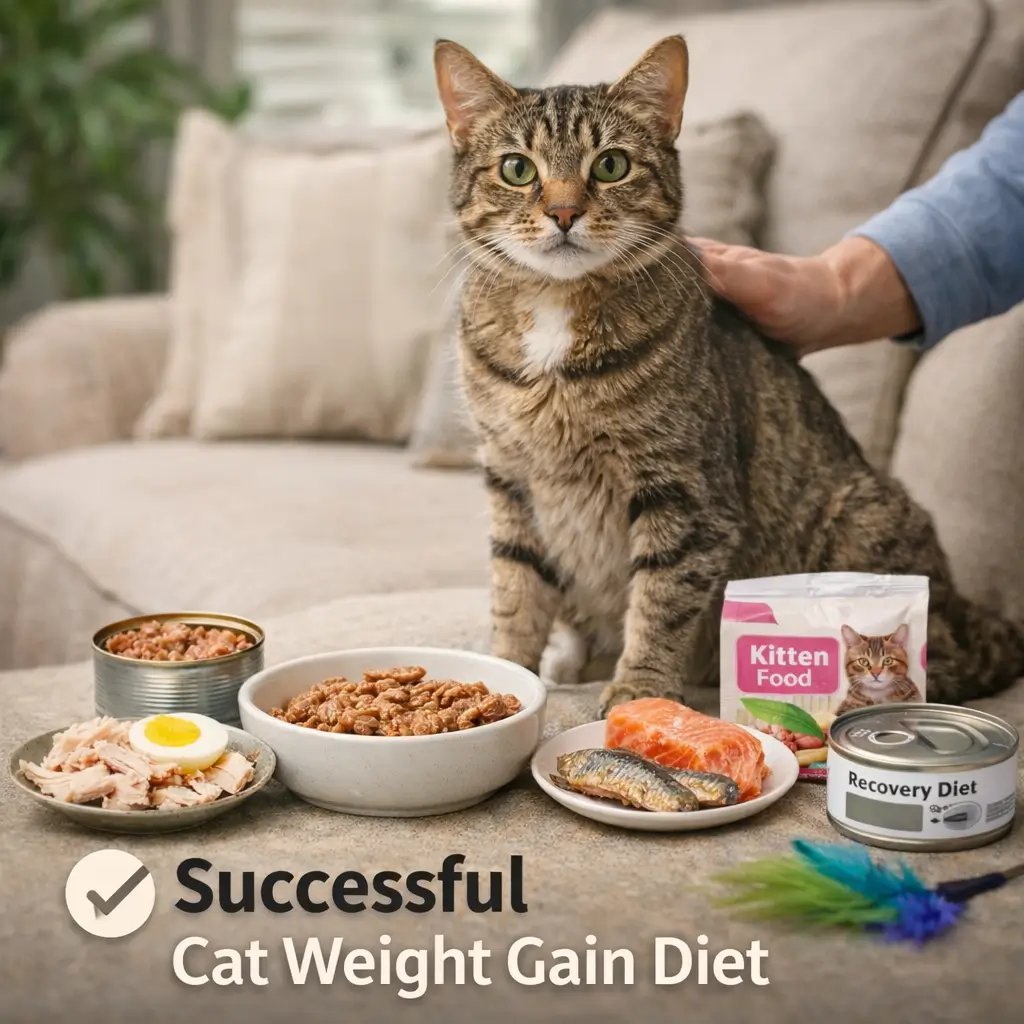
Helping your underweight cat achieve a healthy body condition requires patience, the right food choices, and close veterinary partnership. The six foods we’ve explored—high-calorie wet food, kitten food for adults, cooked eggs, plain cooked chicken, oily fish, and veterinary recovery diets—offer a solid foundation for any cat weight gain diet.
Remember, successful weight restoration isn’t just about calories. It’s about understanding your individual cat’s needs, respecting medical limitations, and creating an eating experience that encourages your feline friend to thrive. By following the guidelines in this article and working closely with your veterinarian, you can help your skinny cat return to a healthy, happy weight.
Your cat depends on you for their nutritional wellbeing. With the right approach, you can make a profound difference in their quality of life. Start with a vet visit, implement these strategies gradually, and celebrate every ounce of progress along the way.